


Subway Runner: Parkour Game
4.076.00 Reviews
App Specs
- Version
- 1.7.4
- Updated On
- License
- Free
- Downloads
- 10,000,000+
- Developer
- Happy Go Game
- Categories
- Arcade
- Platform
- Android
Screenshots
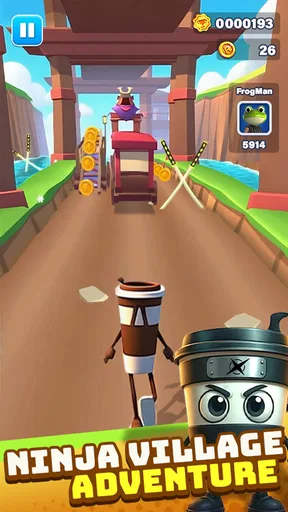
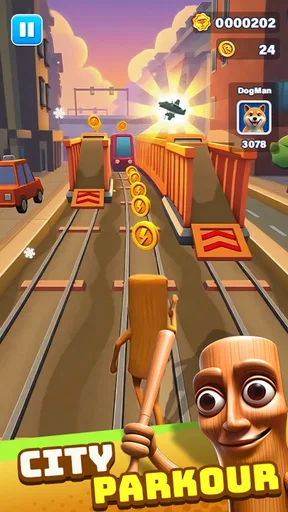
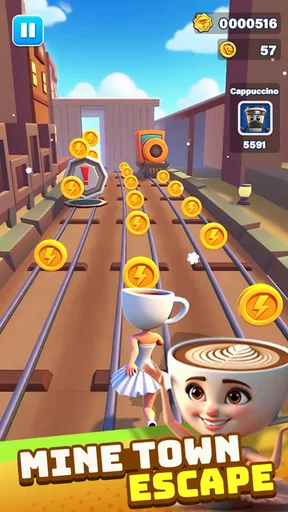
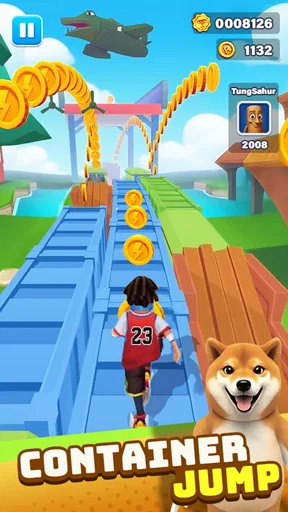
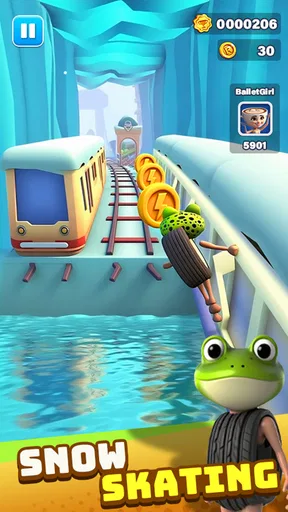
 Analysis by AppCompare
I spent time with Subway Runner: Parkour Game as a quick-play arcade title, and my first impression was easy to understand: it wants every run to feel like a small test of reflexes. You move through a subway setting, avoid trains, keep your run alive, and work toward unlocking jet planes. That combination gives the game a clear hook without asking me to learn a complicated control system.
It is free to play, aimed at Everyone, and comes from Happy Go Game. The game sits in the familiar endless-runner space, but its subway-and-aircraft theme gives the basic chase a little more personality than a completely generic obstacle course. I would recommend it most to people who enjoy short arcade sessions, quick restarts, and gradual goals rather than a deep story or a large strategic system.
How the first runs establish the game’s goals
The opening experience is built around immediate movement. I did not need a long explanation before understanding what mattered: stay in motion, read the track ahead, and react before a train or obstacle ends the attempt. That directness is a real strength for a mobile game. It makes the title suitable for a spare minute while waiting for an appointment, but it also means the game has to earn my attention through its pacing rather than through narrative setup.
The early goal is not simply to survive one run. The more appealing target is to improve the next attempt and move closer to the game’s unlockable jet planes. That gives the first sessions a useful sense of direction. Even when a run ends quickly, I can immediately see why another try might be worthwhile: I may react sooner, choose a safer line, or push farther before the next train appears.
I like this structure because it keeps the learning loop compact. A failed run does not require a long recovery period, and the subway setting makes the danger readable at a glance. The trade-off is that players who want a strong story, character development, or a carefully staged campaign may find the opening quite light. This is an arcade game first, and it does not pretend to be something more elaborate.
One useful habit is to treat the first few attempts as practice rather than as serious records. Instead of trying to move as aggressively as possible, I found it more helpful to watch how much space I needed to make a safe change of direction. That approach reduces the temptation to react at the last possible instant, which is often where an endless runner turns a manageable situation into an unavoidable crash.
Unlocks give short sessions a reason to continue
The jet-plane unlocks are the most important progression signal in the concept. They turn a simple run into a longer-term objective, even though the core action remains familiar. I found that this works best when I wanted a clear reason to play several attempts in a row. The next unlock acts as a visible destination, while each run supplies a small piece of progress toward it.
Worth Reading Before You Choose

EA SPORTS FC Mobile 26 Is a Bigger Football Game, but It Takes Time

Flipboard Shows What News Apps Must Do Beyond the Feed

Switching to Android Auto Means Rethinking Your Driving Routine

Google Calendar Makes a Crowded Week Easier to Manage

Ludo King Makes the Most of the Minutes Between Plans

Baby Panda World Brings Quick Play to Modern Phones, but Its Game Library Feels Busy
That system also creates an interesting choice in how I play. If I focus only on survival, I can take a cautious approach and protect a promising run. If I chase faster progress, I may take riskier routes or continue after a run has become difficult to control. The game’s appeal comes partly from that tension between preserving a run and pushing for a better result.
Players should not expect the unlocks to transform the game into a different genre. The aircraft theme adds motivation and variety to the progression, but the main skill remains timing and movement through the subway environment. For me, that is enough to support casual play, though it may not satisfy someone looking for a large collection of radically different stages or a deep upgrade tree.
A practical way to get more value from the progression is to set a small personal target before starting. I might decide to reach a particular point, improve on my previous attempt, or play until I make three clean decisions in a row instead of simply chasing an undefined “best” run. This makes the unlock path feel less like a distant reward and more like a series of manageable sessions.
Difficulty depends on attention more than planning
The challenge is based mainly on reading what is ahead and responding at the right moment. That makes the difficulty feel immediate rather than strategic. I cannot pause to build a complicated plan; I have to recognize the safe opening and commit to it. The subway theme supports this well because trains naturally communicate danger, and the need to keep moving prevents the game from becoming passive.
At its best, the difficulty curve encourages concentration without requiring specialist arcade skills. A short run can still feel satisfying when I avoid a sequence that would have ended an earlier attempt. The improvement is personal and visible: I am not merely waiting for a stronger character or a better item to solve the problem. My own timing matters.
The limitation is that this style can become repetitive for players who need frequent mechanical surprises. Once the basic rhythm is understood, the excitement depends on how the hazards are arranged and how well the game keeps asking for different reactions. If you prefer puzzle games with many possible solutions, or action games with extensive combat choices, this will feel narrower.
I also would not choose it for a relaxed, low-attention session. A subway runner can be easy to start but difficult to play while distracted. A quick glance away from the screen may be enough to lose the run, so it fits focused breaks better than background entertainment. That is a small but important distinction when deciding whether it belongs on your phone.
Pacing works best in short bursts
The pacing is one of the game’s clearest advantages. Runs are naturally divided into compact attempts, so I can play without committing to a long campaign. When I have only a few minutes, the game gives me a complete activity: start, react, fail or improve, then try again. That rhythm is more convenient than a game that asks me to remember a complex objective after a long break.
Short sessions also make repetition easier to accept. A failed attempt does not feel like losing a large amount of time, and the restart loop encourages experimentation. I can test whether a more cautious route works, then immediately adjust if it does not. This is where the title feels most comfortable: as a lightweight arcade companion rather than as my main game.
There is a possible downside to that same design. Because the basic loop is so focused, longer sessions may expose its limits. After repeated runs, I may want more than another attempt at the same type of challenge. The jet-plane goal helps, but players who expect a constantly expanding adventure should keep their expectations modest.
For an everyday scenario, I can see myself opening it during a short commute break, playing a handful of runs, and stopping after either a personal improvement or a frustrating mistake. It is also well suited to a quick reset between tasks because the rules are easy to remember. I would be less likely to choose it for a long evening where I want narrative progress, exploration, or a social feature to keep changing the experience.
What keeps the loop engaging, and what may create friction
The game’s retention comes from a straightforward combination: immediate action, repeatable runs, and the promise of jet-plane unlocks. That is a sensible formula for an arcade title. It does not rely on a complicated explanation to make the next session appealing. The question is whether the player enjoys improving reflexes and chasing progression in small steps.
The free entry point makes it easy to try. Happy Go Game offers the game without an upfront purchase, while optional in-app items range from forty-nine cents to ninety-nine cents each. I appreciate that the basic decision is simple: install it, play it, and decide whether the loop is enjoyable before spending anything. Still, anyone who dislikes in-app purchase prompts or prefers a one-time purchase model may find the monetization style less comfortable.
My advice is to judge the game on its free core before considering an optional item. An inexpensive purchase does not change the fact that the main question is whether the run-to-run action holds your attention. If the subway challenge already feels repetitive after a short trial, spending money is unlikely to solve that problem. If you enjoy the loop and want to support continued play, the small item range keeps the possible commitment relatively easy to understand.
The age rating of Everyone also makes the game approachable for a broad audience. That does not mean it will suit every player. Younger or casual players may appreciate the simple premise, while experienced arcade fans may want sharper variety or more demanding systems. The rating describes accessibility, not depth, and I would separate those two expectations before downloading.
How it compares with familiar endless runners
Compared with the usual endless runners, this game stands out less through a new control philosophy than through its particular theme and unlock direction. The subway chase is immediately recognizable, which lowers the learning barrier. The jet-plane objective adds a playful destination to the otherwise ground-level run, giving progression a more distinctive flavor than simply collecting a larger score.
That familiarity is both useful and limiting. If you already enjoy quick lane changes, hazard reading, and repeated attempts, the game should feel comfortable almost immediately. If you are tired of endless runners because they often share the same basic rhythm, the subway presentation and aircraft unlocks may not be enough to change your mind. I would choose it over a more generic runner when I want a clean, uncomplicated arcade session, not when I am searching for a major reinvention of the genre.
It also differs from more elaborate arcade alternatives that build around missions, character abilities, or extensive customization. Those games may offer more long-term variety, but they can also demand more time and attention. Subway Runner: Parkour Game is easier to pick up and put down. The trade-off is that its satisfaction depends more heavily on the quality of the moment-to-moment run.
This makes the game a good secondary choice for a phone rather than an automatic replacement for every other arcade title. I would keep it available for short breaks, particularly if I enjoy chasing small improvements. I would look elsewhere for a primary game if I wanted a campaign, multiplayer competition, or a progression system with many different forms of decision-making.
Device expectations and the practical download decision
The game supports Android devices running version 7.0 or later, which covers a broad range of phones and tablets. That makes it easier to consider on an older compatible device, although the actual comfort of play will still depend on the screen, responsiveness, and general condition of the device. For a reflex-focused runner, touch response matters more to me than raw visual ambition.
The current release is version 1.7.1. I would keep the game updated through the normal app store process so that I am playing the current build listed for it. The title arrived on April 7, 2025, and it has already reached over ten million installs, with an average rating of 4.0 from roughly thirteen thousand ratings. Those figures suggest a substantial audience, but they do not replace personal testing: an arcade loop can be popular and still fail to match someone’s preferred pace.
The review volume is smaller than the rating total, with seventy-seven written reviews, so I would read individual comments carefully rather than treating the average as a complete explanation. In my view, the most useful signal is whether the player enjoys the repeated subway runs and accepts the limited scope. That is the central decision, more than the download count.
Who should play it and who should skip it
I would recommend this game to someone who wants a free arcade title that starts quickly, uses an easy-to-grasp premise, and offers a visible unlock goal. It is especially suitable for short breaks, casual reflex practice, and players who like improving through repetition. The jet-plane progression gives the runs a little more purpose than an endless score chase with no destination.
I would be more cautious about recommending it to players who need a strong narrative, substantial customization, or a large range of activities. It is also not the best choice for anyone who dislikes restarting after mistakes or finds in-app purchases distracting. Players looking for a calmer experience should consider a puzzle or turn-based alternative, while those wanting deeper arcade variety may prefer a title built around multiple modes and more complex progression.
My own verdict is positive but specific: this is a focused, accessible runner, not a complete arcade universe. The goals are clear, the unlocks provide a reason to return, and the pacing suits short sessions. Its main weakness is the same quality that makes it convenient—the loop stays narrow. I would install it when I want a quick subway dash and a modest progression target, but I would not expect it to replace a larger game collection.
Subway Runner: Parkour Game is worth trying if you enjoy compact runs where better timing matters more than complicated strategy. Happy Go Game has kept the idea easy to enter, and the free price makes the experiment low-risk. Just approach the jet-plane unlocks as motivation for steady improvement rather than as a promise of a radically different game. With that expectation, it delivers a pleasant arcade diversion that knows exactly what kind of session it wants to provide.
Pros
- Fast-paced parkour gameplay is easy to learn and enjoyable in short sessions.
- Responsive controls make jumping
- sliding
- and dodging feel natural.
- Bright 3D environments give the game a colorful
- energetic look.
- Collectible items and missions add goals beyond simply running farther.
- Playable offline
- making it convenient for travel or limited connections.
Cons
- Frequent ads may interrupt gameplay
- especially after failed runs.
- Progress can feel repetitive once the main obstacles become familiar.
- Some upgrades and rewards may encourage optional in-app purchases.
- Performance may vary on older devices or phones with limited storage.
- Background music and sound effects can become repetitive over time.
FAQs for Subway Runner: Parkour Game
What is Subway Runner: Parkour Game?
Subway Runner: Parkour Game is an endless running game focused on fast reflexes, obstacle avoidance, and collecting rewards. You guide a character through subway-style environments while jumping, sliding, and changing lanes to stay alive. The objective is to run as far as possible, achieve a high score, and complete challenges without crashing into trains, barriers, or other hazards.
How do you play Subway Runner: Parkour Game?
The controls are generally designed for quick, simple gestures. Swipe left or right to move between lanes, swipe upward to jump, and swipe downward to slide under obstacles. Timing is important because the speed increases as the run continues. Players should watch the path ahead, collect useful items when safe, and avoid focusing only on coins when an obstacle is approaching.
Does Subway Runner: Parkour Game require an internet connection?
The basic endless-running gameplay can usually be enjoyed offline, which makes the game suitable for short sessions while traveling or when mobile data is unavailable. However, certain features may depend on an internet connection, including advertisements, online rankings, cloud-related services, promotional rewards, updates, or in-app purchases. Availability can vary depending on the version and device.
Is Subway Runner: Parkour Game free to download and play?
Subway Runner: Parkour Game is typically available as a free download, allowing players to start running without paying an upfront purchase price. Free versions may include advertisements and optional in-app purchases for coins, power-ups, cosmetic items, or other advantages. Before downloading, check the store listing for the current purchase details and review any payment settings on your device.
Is Subway Runner: Parkour Game suitable for children?
The game is generally easy to understand and does not require advanced reading or complicated controls, making it accessible to many younger players. Nevertheless, parents should check the age rating, advertising content, privacy information, and available in-app purchases before installation. If children use the game, parental controls can help prevent accidental purchases and limit exposure to unsuitable advertisements.


